
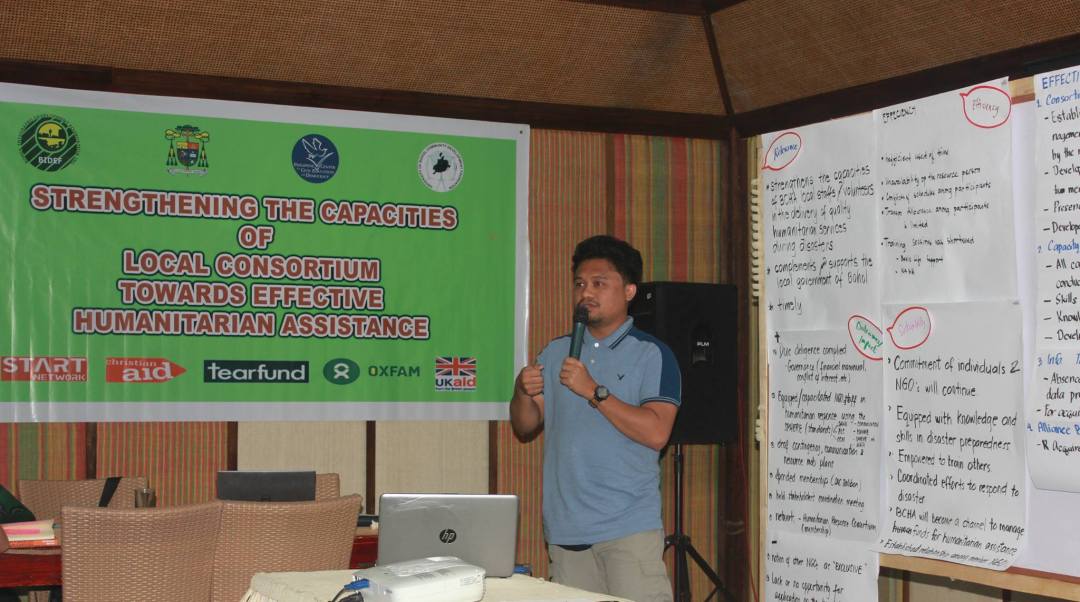
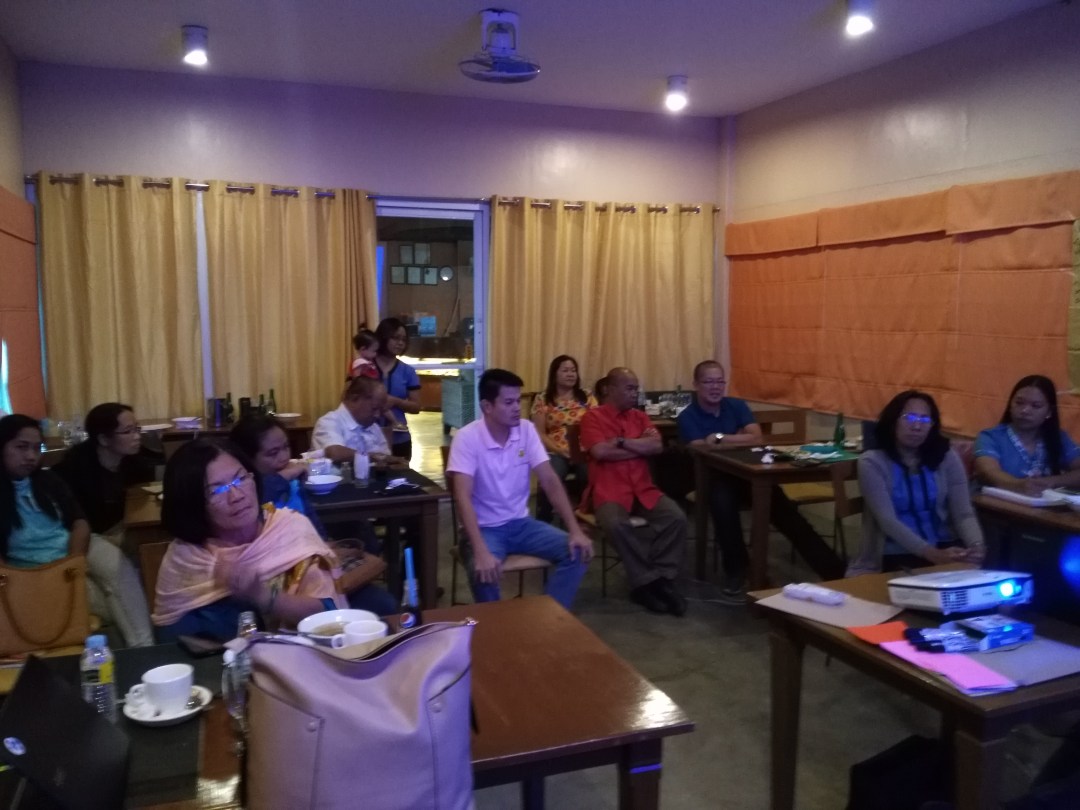
Step Up Consulting Services facilitated the project-end evaluation workshop of the Bohol Consortium on Humanitarian Assistance (BCHA). The evaluation workshop reviewed the implementation of the Strengthening the Capacities of Local Consortium towards Effective Humanitarian Assistance project participated by BCHA members, namely, the Bohol Integrated Development Foundation, Inc. (BIDEF), Social Action Center (SAC),UB Community Development Foundation, Inc. (UBCDFI), and Philippine Center for Civic Education and Democracy (PCCED). The workshop was conducted on 11-12 January 2018 at Bohol Bee Farm, Dao, Dauis Bohol.
The province of Bohol is highly vulnerable to various natural and manmade calamities. It is often ravaged by typhoons which appear to be increasing in frequency and strength each year. Monsoon winds that produce storm surges, heavy rainfall and sea level rise also pose threats to the province. More importantly, the province has various known faults that have the capacity to generate massive earthquakes similar to the 7.2 magnitude earthquake that struck the province on October 15, 2013.
The occurrence of these hazards is inevitable. Hence, a group of local organizations that managed to raise funds during the great Bohol earthquake in 2013 initiates to organize and forge themselves to become a local consortium for humanitarian assistance aptly named BCHA. However, this newly organized group has to be strengthened and capacitated in order to become effective in their goal of coming and working together for humanitarian aid to disaster affected communities/individuals.
Implemented in 2016 to 2107, the Strengthening LC Project (Strengthening the Capacities of Local Consortium towards Effective Humanitarian Assistance) aimed at improving and strengthening the capacity of the consortium members to become effective in providing assistance to communities and individuals affected by natural and man-made disasters.
The workshop was able to identify significant changes that was caused by the project at the individual, non-government organization (NGO), and consortium levels.
At the individual level, the three most significant changes are the (1) Change in attitude more particularly in having more patience to deal with challenges; (2) Enhanced knowledge and skills on humanitarian response; and (3) Increase in the level or nature of assertiveness of project team members. At the NGO level, the three significant changes include (1)the building of credibility and confidence of each organization trained in performing disaster risk reduction and humanitarian related activities; (2) enhanced coordination and linkaging among BCHA members and other organizations; and (3) Services rendered are based on lessons learned from the capacity building activities, including improvements in systems and procedures (e.g. finance, monitoring and evaluation, among others). At the consortium level, the project was able to (1) equip the personnel on how to respond to disaster with clear and focused direction; (2) inspire the consortium to pursue development programs together as they were able to achieve a lot by working together; and (3) capacitate the consortium to network and link with other humanitarian assistance groups and pursued its commitment to extend its services beyond Bohol.
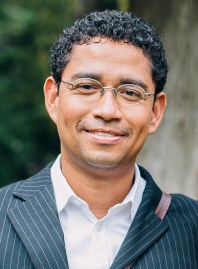 Canjura is one of the latest addition to Step Up’s roster of consultants. He joins Step Up this year as one of the researchers of the project on
 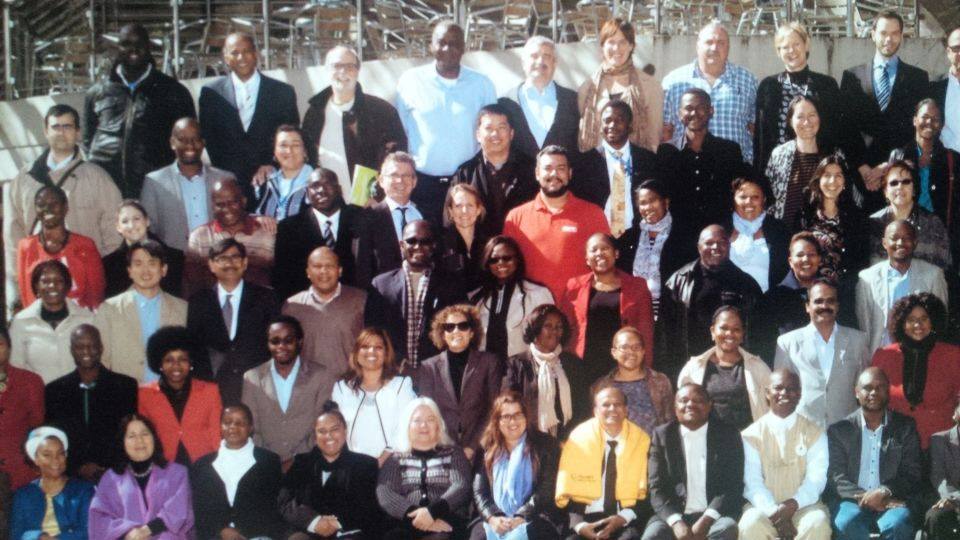 On 27-31 July 2015, Step Up’s Strategy Advisor, Mr. Michael Canares, joined seventy other scholars from around the world to attend the Social and Solidarity Economy at the International Development Corporation in Johannesburg, South Africa.
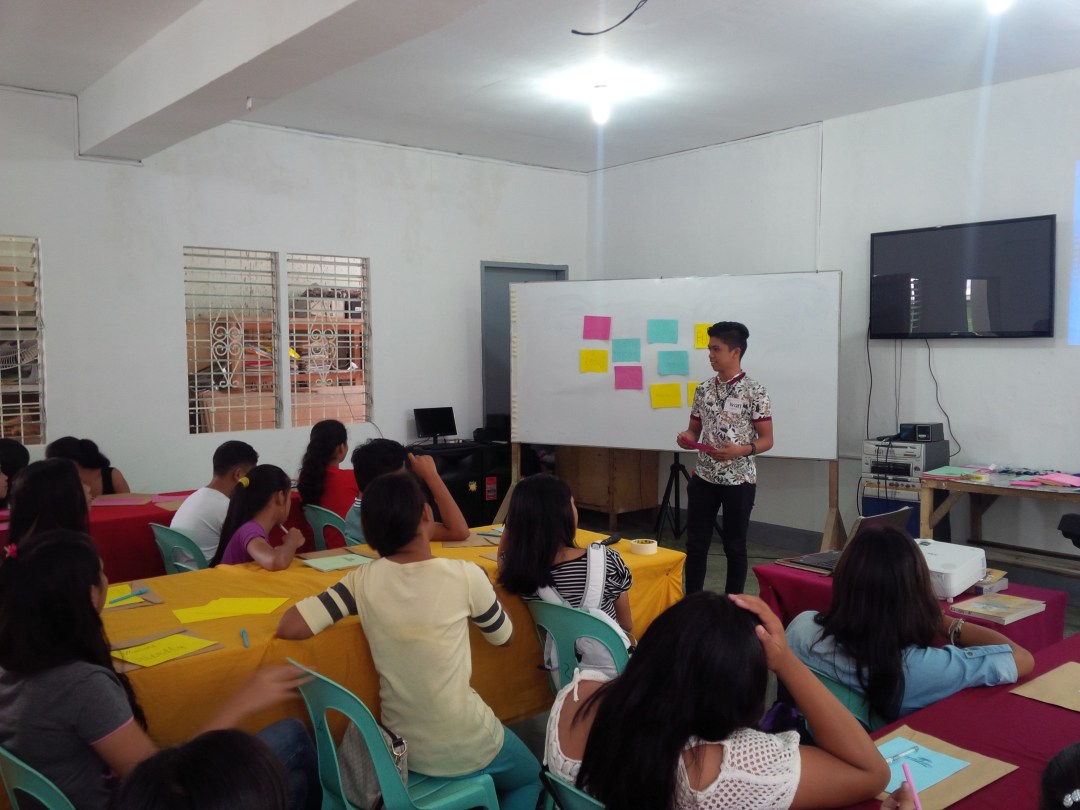 Step Up Consulting sponsors the leadership training of thirty high school students of Sacred Heart College in Calamba Misamis Occidental. The training was part of the SHS Alumni Batch 91 activities of which Step Up’s strategy advisor is the class president. The training was conducted on 4 July 2015 at the school’s audio-visual room.
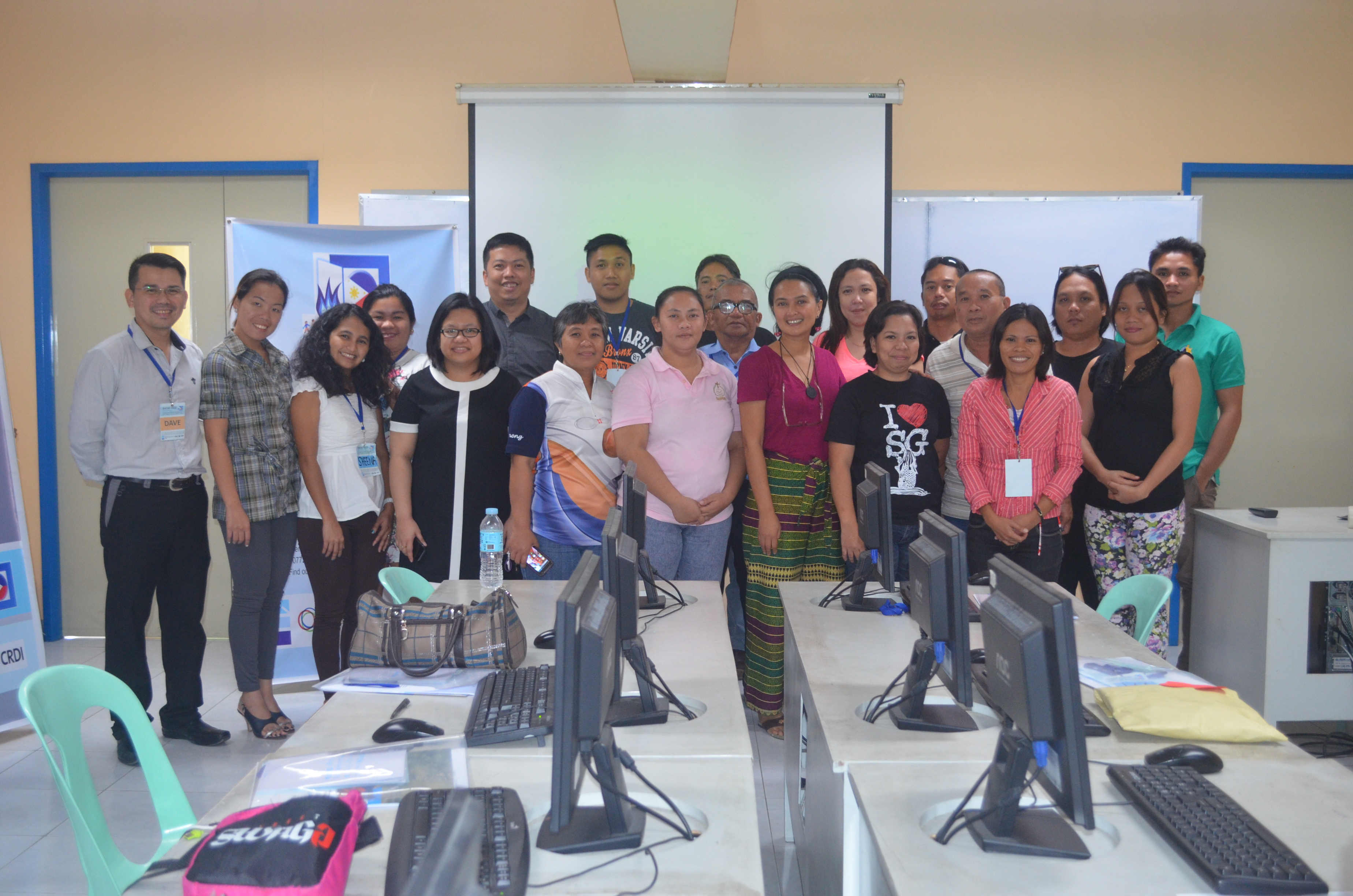
 Dr. Dave Marcial is dean of computer studies at Silliman University. Dave’s research is on ICT applications and how this has impacted society more particularly the education sector, drawing from extensive studies in IT (bachelor and masters) and blending that with his doctorate degree in educational management. Dave is an author of numerous papers and has presented his work in different conferences in the Philippines and abroad. He is currently the president of the Philippine Society for IT educators, and the founder of the Society for Information and Communication Technology in Teacher Education. More information regarding Dave can be found


 Step Up Consulting