Step Up Assists DILG

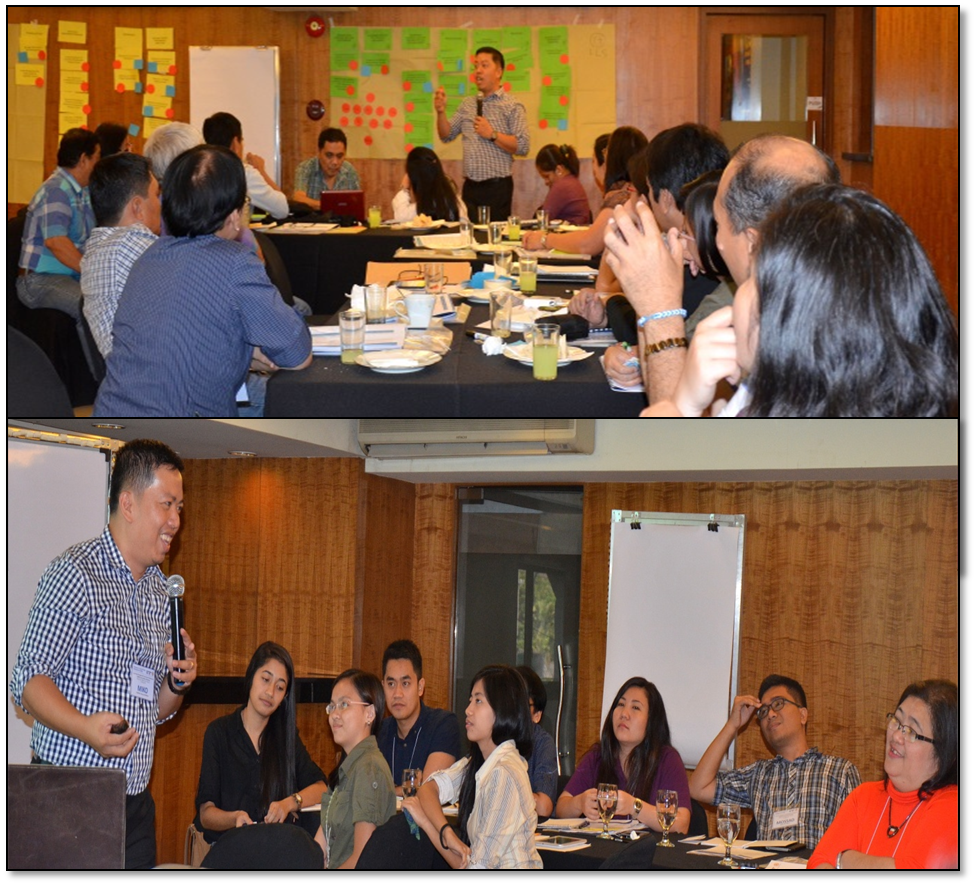
Mr. Canares and the participants of the PRMF/DILG consultative workshop on LRMPA.

Step Up Consulting Services was contracted by the Provincial Road Management Facility to assist the Department of Interior and Local Government (DILG) in reviewing its Local Road Management Performance Assessment Tool (LRMPAT), a tool in assessing the performance of local government units.   A consultative workshop was done with representatives of regional offices of DILG across the country last 22-23 May 2014 at The Linden Suites in Ortigas, Manila.

The Local Road Management Performance Assessment (LRMPA) Consultative Workshop started at 8:45 a.m. on 22 May with an opening program where Ms. Ruby Romero of DILG – SLRF  thanked the PRMF Team and Department of Foreign Affairs and Trade (DFAT) of the Australian Government for the support and partnership with DILG. For his part, Mr. Luke McNamara, Capacity Development Manager of PRMF emphasized the importance of sharing insights and experiences in the course of the workshop to further understand and improve the LRMPAT.

The LRMPAT was developed in 2012 when Mr. Canares was still the Monitoring and Evaluation Coordinator of PRMF.  The tool was pilot-tested in select cities and provinces in the same year to serve as input to the tool’s final revision.  Mr. Ronet Santos was then contracted by PRMF to facilitate the whole process.  In 2013, DILG rolled-out the implementation of the tool nationally and thus the need to hear the perspectives of those conducting the assessments in the provinces and cities.

A total of 46 participants attended the two-day workshop.  Mr. Michael Canares was the lead facilitator of the activity while Ms. Jean Celeste Paredes was its documenter.
Step Up is Finalist at U4 Proxy Competition

u4 workshopStep Up Consulting Services is one of the five finalists at the U4 Proxy Competition launched by the U4 Anti-Corruption Resource Center based in Bergen, Norway.  Mr. Michael Canares, Managing Consultant of the firm, presented his idea in front of scholars, aid agency representatives, and students, of how corruption at the local level can be measured using locally-generated tax and fees as a proxy indicator.

U4 is one of the leading think tanks focusing in anti-corruption.  It concentrates its efforts in assisting donor practitioners to address corruption challenges more effectively through their development support.  The centre is operated by the Chr. Michelsen Institute – an independent centre for research on international development and policy – and is funded by AusAID (Australia), BTC (Belgium), CIDA (Canada), DFID (UK), GIZ (Germany), Norad (Norway), Sida (Sweden) and The Ministry for Foreign Affairs of Finland.

The proxy challenge competition was launched last year “to address the perennial problem of assessing whether anti-corruption efforts are successful. “The Proxy Challenge” calls for greater use of bespoke proxy indicators. To assemble a body of promising ideas, U4 selected 5 finalists coming from development practitioners, monitoring and evaluation professionals, and researchers and convened these researchers in Bergen to present their work.

The five finalists were  (1)Integrity Action; (2) Bernard Gauthier (HEC Montréal), Frédéric Lesné (CERDI), Joël Cariolle (CERDI); (3) Mihály Fazekas (University of Cambridge and Corruption Research Centre); (4)  Joël Cariolle (CERDI), Frédéric Lesné (CERDI), Elise S. Brezis;  and Michael Canares (Step Up Consulting). Mihaly Fazekas was the winner of the competition.

Michael Canares said that having been selected as one of the five finalists was already an honour in itself. In his presentation, he thanked the panel for giving him the opportunity to present his idea. Mr. Canares is the only presenter and finalist coming from the global south.

Step Up Managing Consultant Lectures in UKZN-Durban

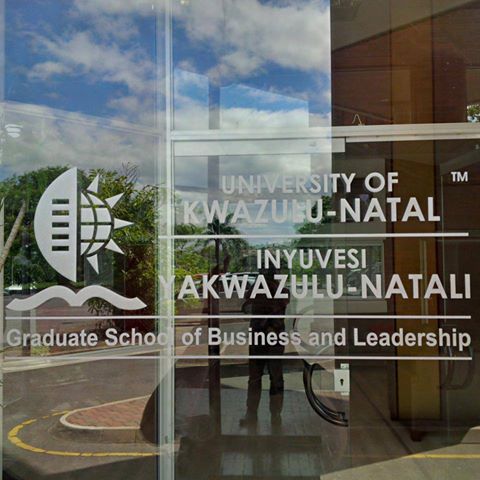
UKZNMichael Canares, Managing Consultant of Step Up Consulting Services, speaks as guest lecturer at the University of KwaZulu-NatalGraduate School of Business and Leadership in Durban, South Africa last 11 December 2013. Mr. Canares was invited by Dr. Jennifer Houghton, academic leader of the Regional and Local Economic Development Initiative of the school. Mr. Canares and Dr. Houghton spent a fellowship together at Brown University in the US in June 2010.

Mr. Canares’ talk, attended by academics and graduate students of the school, was entitled “When Investing in the Local Does or Does Not Work:  Case Studies from Vietnam, Cambodia, and the Philippines”.  The presentation focused on four case studies and argues that there are defining patterns where investments in local development work and contexts where the power of the local can be harnessed to achieve desirable social ends.

In his introduction to Mr. Canares, Professor Stephen Migiro, Dean and Head of School expressed optimism that future partnerships can be explored by the school and Mr. Canares, as well as with Holy Name University, where Mr. Canares serves as managing editor of an academic journal.

Step Up Managing Consultant Attends India Meeting on Open Data

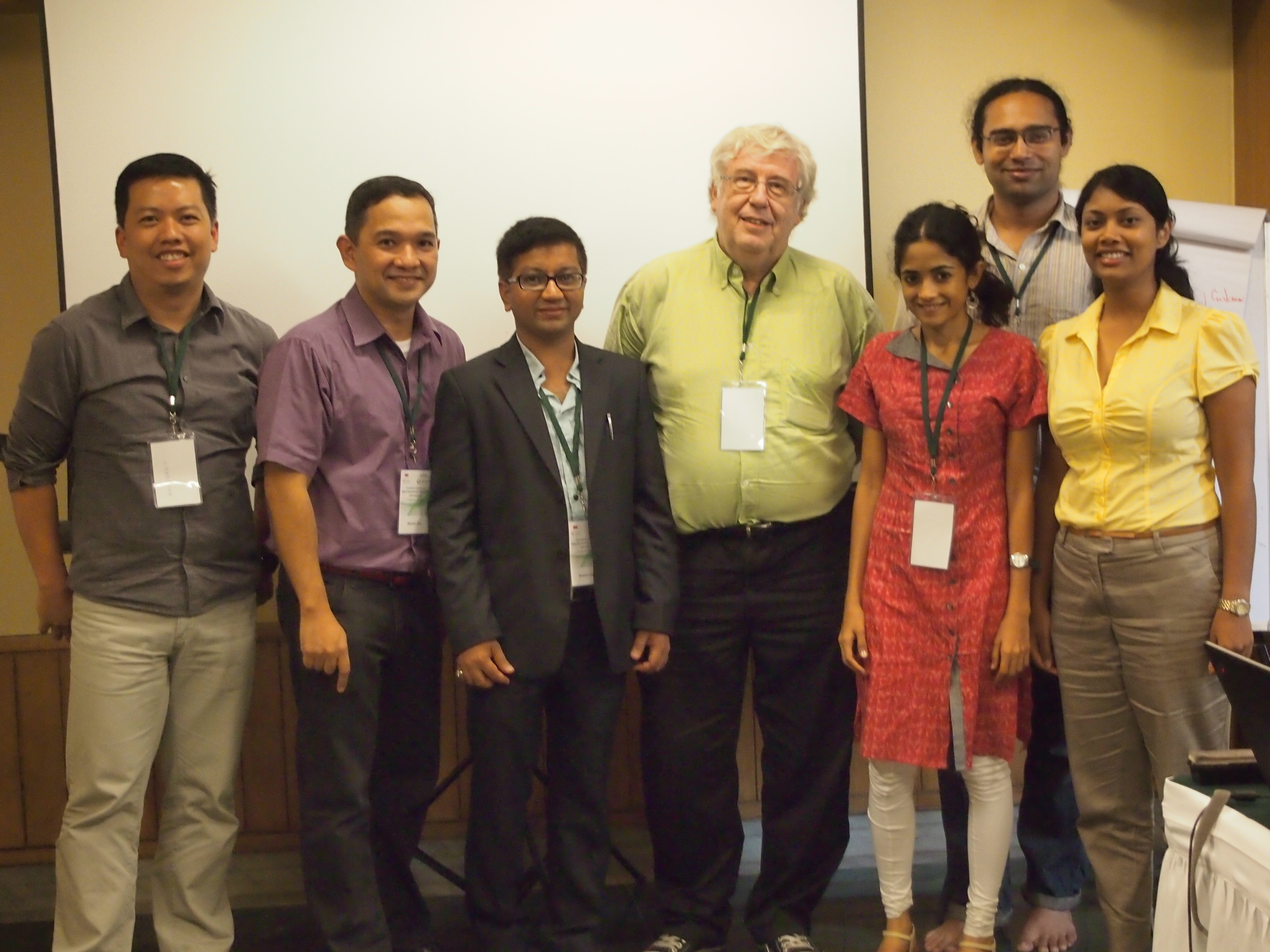
Michael Canares, with some of the participants in the India Meet. Dr. Michael Gurstein (middle, in green polo) is one of the mentors of the project.

Mr. Michael Canares, Managing Consultant of Step Up Consulting Services and Team Leader of the Open LGU Research Project was one of those invited to attend the Regional Project Meeting of the Emerging Impacts of Open Data project funded by IDRC through the World Wide Web Foundation.  The meeting was held at the The Energy and Resources Institute (TERI) in New Delhi, India last 16-19 July 2013 and was attended by more than twenty people from within Asia, and from the UK and Canada. The meeting also coincided with the TERI workshop on Open Government Data and Resources.

The meeting introduced the research project to stakeholders in India. At the same time, the participants were also orientated to the state and condition of open government data in India.  An afternoon project launch on 16th June was done with representatives from different sectors in India – government, civil society, business community, and IT professionals.  India is one of the countries with a right to information act (RTI) that has since empowered citizens to demand from government data to explain, for example, its spending and investment decisions.

The meeting also provided an opportunity for the researchers to discuss different tools used in the study of open government data.  Among those discussed in the forum were stakeholder’s mapping, surveys, follow-the-data, news analysis, focus group discussions, and key informant interviews.  Mr. Canares, in one of the sessions, led the discussion on the use of stakeholders’ mapping to define how stakeholders (e.g. business, civil society, research institutions) interact with government, and use government data for their purposes.  This workshop was attended by one of ODDC project mentors, Michael Gurstein.

Michael Gurstein is one of the leading thinkers in community informatics. Most of his work deals with how information and communications technology empowers and enables communities. In this meeting, Dr. Gurstein contributed significantly to the discussion most especially in unearthing underlying theories informing the methods and in refining analysis frames of the different research methods that the researchers would like to use.

Step Up Represented in ODDC Meeting in London

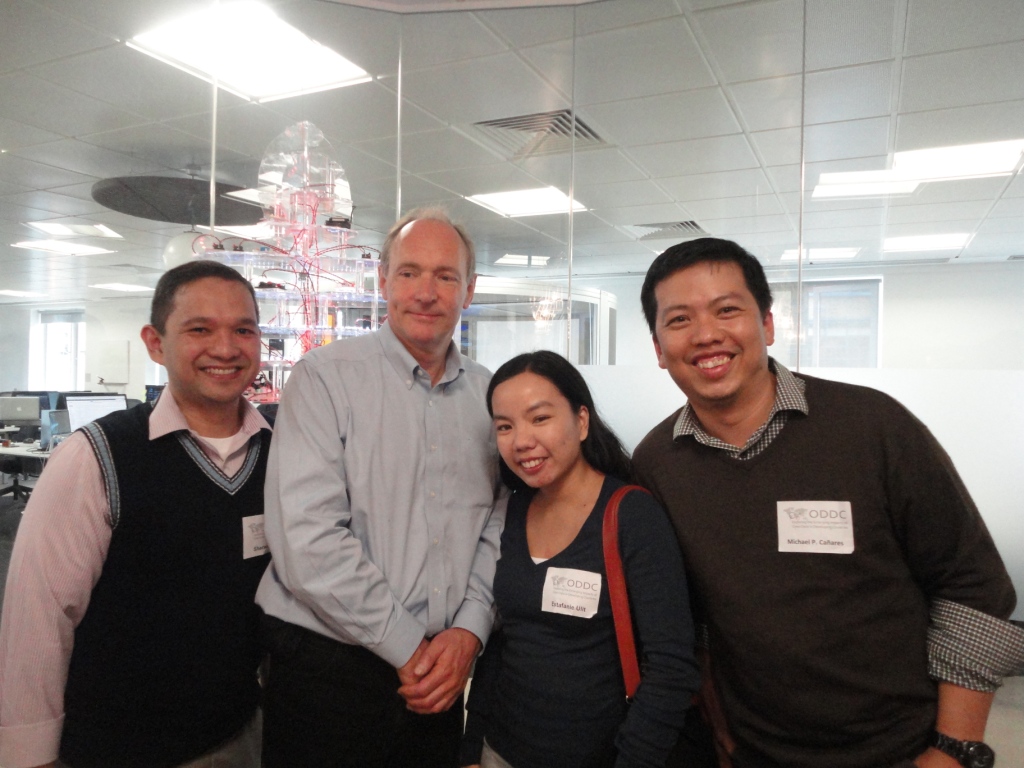
MPC with Tim Berners LeeMichael Canares, Team Leader of the Open LGU Research Project attended the first network meeting of the Emerging Impacts of Open Data in Developing Countries (ODDC Project)  Research Project in London.  In this photo, Michael Canares is with Tim Berners-Lee and the researchers from De La Salle University, Manila, who are also part of the ODDC project.  Tim Berners Lee invented the world wide web in 1989 and is the founding director of the World Wide Web Foundation, the implementer of the ODDC project.

The network meeting was held at the Open Data Institute in London, United Kingdom last 24-25 April, 2013.  It was an an opportunity for project leaders of the 17 projects to get to know each other, and to explore shared research issues in understanding emerging impacts of open data.


The participants also attended an evening reception prior to the meeting at the Lancaster House co-hosted by the Open Government Partnership steering committee.  At this reception, Web Foundation founder, and Web inventor, Sir Tim Berner-­Lee formally launched the ODDC project and expressed the importance and potential contribution of the research to the work of the Open Government partnership, more particularly in exploring issues related to the use of open government data across the globe.

While in London, Mr. Canares also took the opportunity to attend the symposium on Data Driven Public Services hosted by Future Gov and sponsored by Capita. In this symposium, examples of how data can be effectively used to deliver services on the part of governments, or demand for better service delivery, on the part of citizens and neighborhoods.


Step Up Trains LGU GST Facilitators

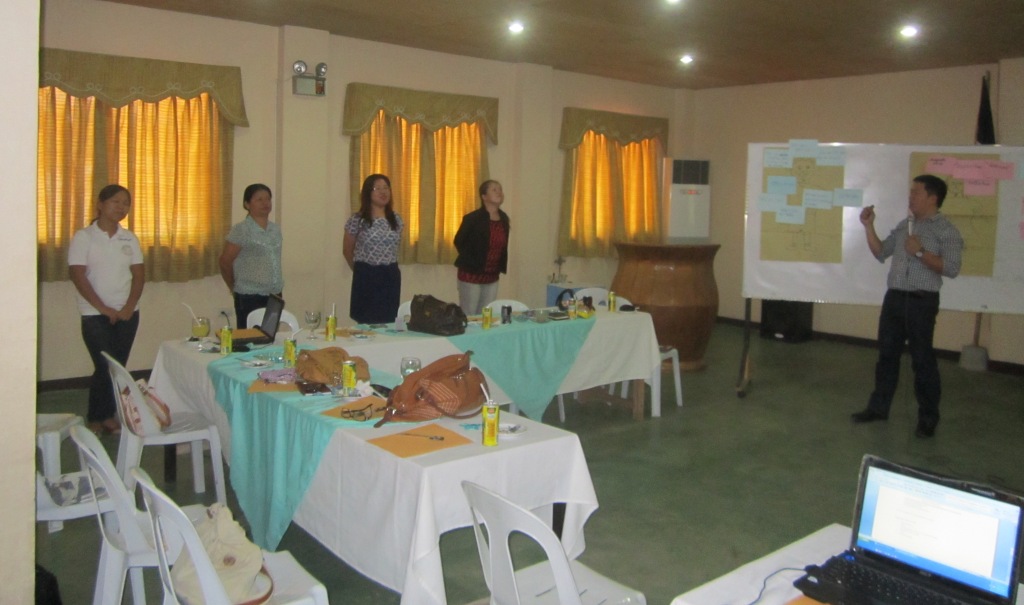
Buenavista TOT TrainingStep Up Consulting Services trained 14 representatives of LGU Buenavista on how to conduct gender-sensitivity trainings as part of the assistance of the GREAT Women Project to the municipality.  The training was conducted in 20-23 March 2013 at Galilea Center for Education and Development and was attended by representatives from the local government unit of Buenavista, the Department of Education, and the local community college.

The GREAT Women project aimed to enhance the enabling environment for women’s economic empowerment (WEE)resulting in sustainable livelihoods for women. It sought to contribute to a gender-responsive environment for the economic empowerment of women, particularly women in microenterprises. In Bohol, the GREAT Women project is implemented in the municipalities of Buenavista, Balilihan, and Jagna.

Step Up managing consultant, Michael Canares, has been assisting the GREAT Women Project (GWP)  not only in Bohol, but also nationally.  In 2010, Mr. Canares facilitated the re-scoping workshop of GWP after its midterm evaluation. Besides Bohol, Mr. Canares also assisted the Metro Naga and Iloilo.

The participants of the training were very thankful to GWP and to the facilitator because they learned significantly from the sessions.  They did not only learn how to facilitate GST sessions, but also how to design participatory events on GST.

Step Up Implements Open LGU Research Project.

logoStep Up Consulting Services is one of the implementers of a global research project “Exploring the Emerging Impacts of Open Data in Developing Countries”.  The project is a “multi-country, multi-year study led by the World Wide Web Foundation to understand how open data is being put to use in different countries and contexts across the developing world.”

Step Up’s proposal was one of the 17 research projects conducted across the world, and the second in the Philippines. The research project is entitled “Opening the Gates: Will Open Data Initiatives Make Local Governments in the Philippines More Transparent?” or otherwise known as the “Open LGU Research Project” looks at how the sharing of governance information online has impacted on local government systems, and how the information and data has been accessed and used by civil society representatives and intermediary groups. The project will identify policies and processes that could support the Philippines to more fully realise an open government data agenda for local government, and will identify challenges currently faced in the supply and use of local government data.

The project expects to contribute to the Department of Interior and Local Government’s efforts regarding the Full Disclosure Policy (FDP), as this would be the first time that a study of this scale will be conducted to know how local government compliance to the FDP has impacted on local governance, more particularly in three provinces across the country.

ODR-Network_hi-resODDC_hi-resWebFoundation_LogoIDRC_Logo